
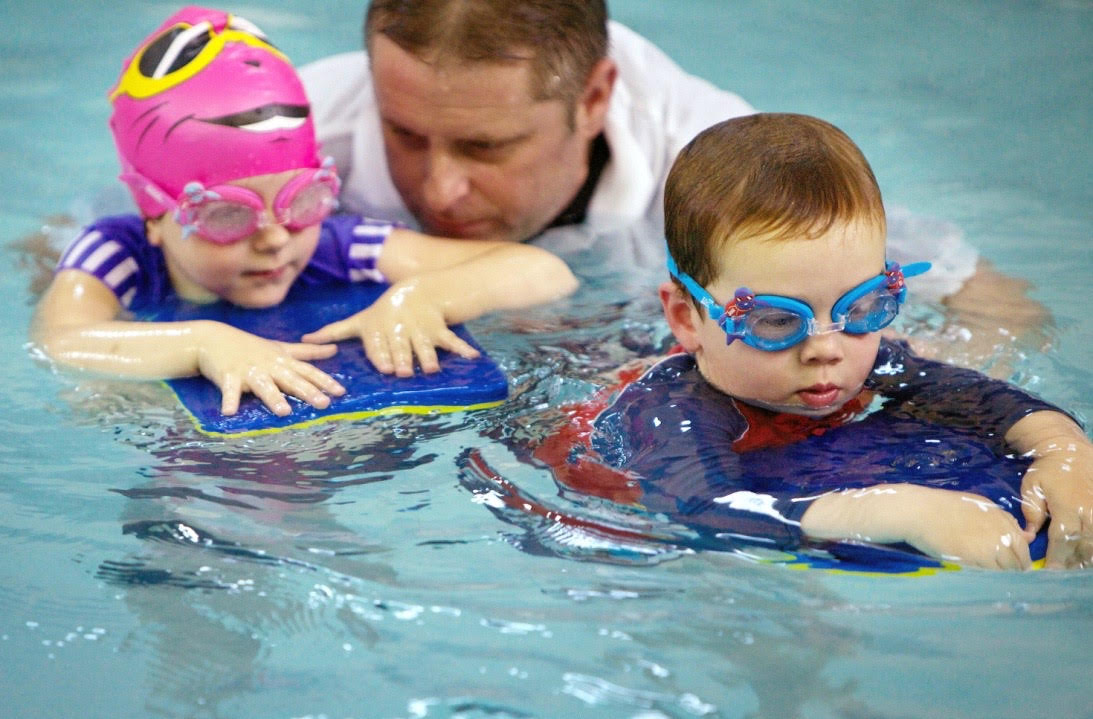
Swimming is a vital life skill, with significant benefits for our physical health and mental wellbeing. In urban environments we often forget how important it is for children to learn how to swim. North London is full of public pools, private swim schools, and even open water swimming spots. Get out there and reignite your passion for the water, and give your children the chance to learn how to swim in an environment that is right for them.
Picking a swim school can be hard, so I sat down with Andy Staite, the owner of Just Swim, to chat about how he got into the business, his teaching style and what advice he has for parents.
Just Swim operates across multiple pools in the north London Boroughs of Haringey, Camden and Barnet. With after-school, weekend and 1-to-1 options for varying abilities from preschool to adult, there is something for everyone.
Q: Andy, how did you get into swimming, and did you always know you would be a teacher?
A: No, not at all. I lost my job, and I would take my daughter to the local pool, trying to teach her to swim. People started commenting on how good I was at it, so I looked into how you qualify for teaching and went on a course. I swam competitively when I was younger, but I had never thought about a career in it until that point.
I went on the course, got my first teaching job in 2010 and continued to grow in confidence over the next few years. I opened my own school, Just Swim, in 2012 – I was the only teacher to begin with, operating out of one pool!
Q: How would you define your style?
A: You need to embrace and acknowledge that each person you teach is different. In our environment we are lucky as we can encourage movement, awareness of surroundings and a safe space; somewhere people can express themselves without criticism, as long as they are safe. This attitude is especially important when teaching those with special educational needs, or physical or mental disabilities of some kind.
I know that parents pay for lessons, and so they wish to see progression, but as long as the children are happy and some development is being made, I’m happy. We do follow the pathway’s criteria, but swimming to me is more about children feeling safe and having fun in the water, at the end of the day that’s our ethos as a swim school.

Q: How do you encourage parents to adopt this open mindedness?
A: If you can see your child is happy, safe and engaged then what isn’t to like about the style? It doesn’t work for everyone, and we make no claim it does, but we encourage learning through fun.
Q: Are you proud of your swim school and the success of the children you teach?
A: Of course I’m proud of my achievements, but I’m immensely proud of the children and their parents and carers. As long as we can open their eyes to the joys of swimming it’s a job well done.
As an industry, swim schools lose children too quickly. Parents shouldn’t stop lessons as soon as a child can swim 25 metres because there’s more to learn than this. We should work closely with sailing schools, the Royal National Lifeboat Institution, fishing schools and other organisations to try and promote further awareness of the water. It’s not all about competitive swimming and people need to know that.
Q: What advice would you give parents looking for a swim school for their children?
A: Happiness comes first. If the child doesn’t get on with the teacher and isn’t happy, they will never learn, no matter how much you might want them to. You need to find an environment your children feel comfortable in, that’s the only advice I can give.
We hope you find this article useful and welcome feedback at info@homestartcamden.org
Article by: Natalya De La Motte