
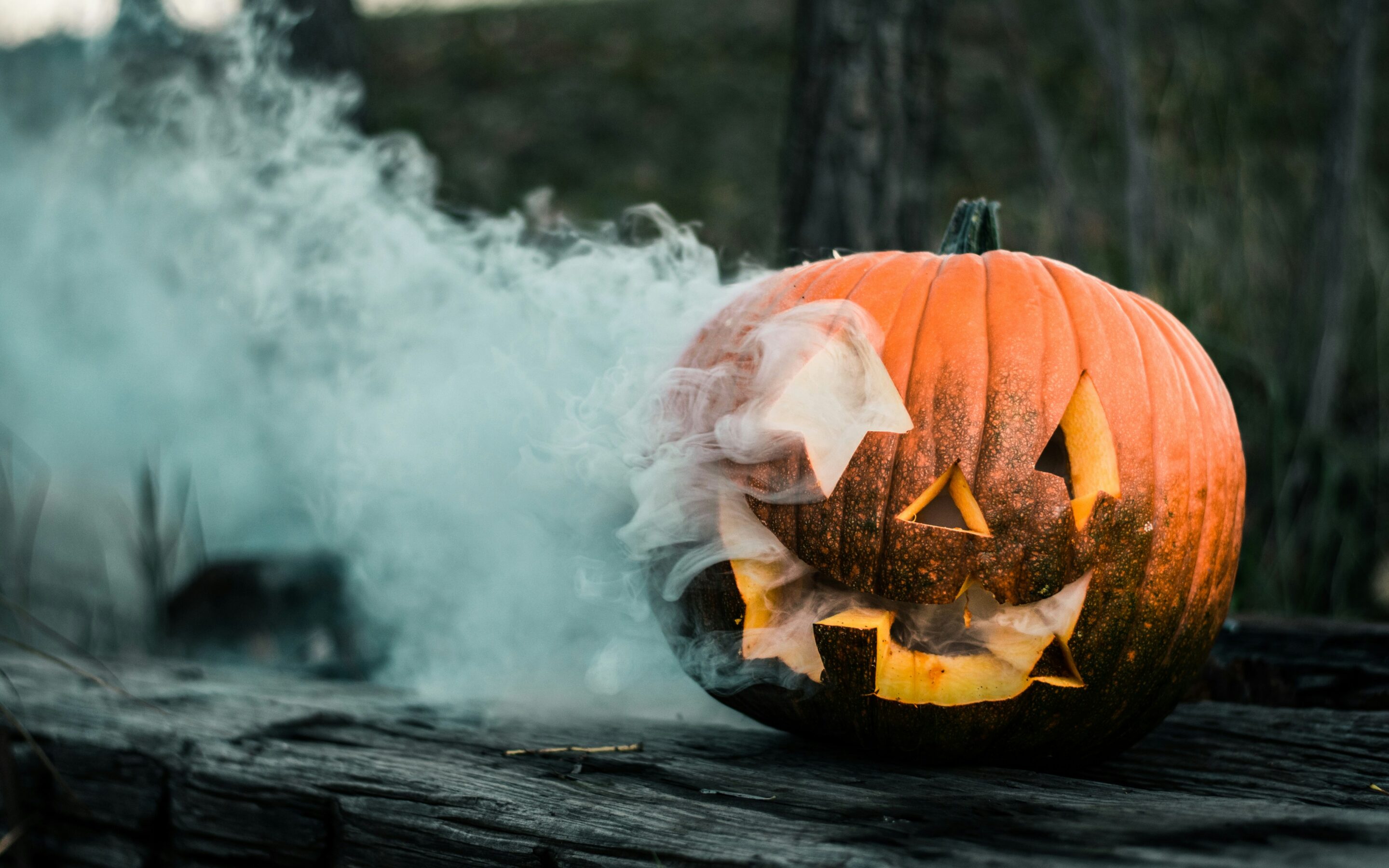
Whether it’s picking or decorating, pumpkins have become the unofficial symbol of Halloween. But why do we carve ghoulish faces into them each October? Behind these brightly coloured vegetables lies a sinister story.
The Legend of Stingy Jack.
According to Irish folklore, there lived a man by the name of Stingy Jack. A wicked character, he manipulated and cheated whomever he encountered. Whispers of Jack’s misdeeds even reached the devil’s ears. Curious, the devil sought out Jack.
 The devil found Jack in a bar. Stingy Jack persuaded the devil to transform into a silver coin and trapped him in his pocket. Eventually, Jack set the devil free, under the promise that he would be left alone for ten years.
A decade later, the devil returned, seeking vengeance. Again, wily Jack deceived the devil, persuading him to climb a tree and carved a cross upon the bark. Enraged at being trapped, the devil struck another bargain. Jack would never pass through the gates of Hell in exchange for the devil’s freedom.
At last Jack died. Because of his sinful life, he was unable to enter Heaven, and his deal with the devil meant he could never go to Hell. His soul was condemned to wander the lands for all eternity. Angry that Jack had evaded Hell, the devil threw an ember which Jack placed in a hollowed-out turnip, its flame lighting his endless roam across the earth. This is why candles are placed in pumpkins.
In America, pumpkins carved at Halloween are called Jack-o’-lanterns. This harks back to the name Jack of the Lantern, a nod to the tradition’s Irish roots.
How Did Pumpkins Become Part of Halloween?
 Halloween originates from the Celtic festival of Samhain, which means ‘Summer’s end’. Celts believed that this was when the veil between the living and the dead was at its thinnest. In the 8th century, the Catholic Church moved All Saints Day to the 1st of November. This change meant that All Hallow’s Eve (or Halloween) fell on the 31st of October. Elements from the different festivals combined and were spread around the world. Traditions such as dressing up in costumes and carving pumpkins became part of the Halloween we celebrate today.
Frightening Fact: Million Tonnes of Pumpkin Waste
Each year, millions of pumpkins are bought, carved and then left to rot, resulting in £15 billion of food waste. Charities such as Hubbub run a #eatyourpumpkin campaign, which suggests recipes for discarded pumpkin flesh. Newsround suggests composting and seed harvesting as eco-friendly ways to repurpose old pumpkins. Whatever you do with your pumpkin, we at Home-Start Camden and Islington are here for you and your community this Halloween.
Written by Ali